It seems they’ve fallen out again. In the middle of our conversation, my friend was speaking ill of our mutual friend, and this is how he put it: “Look, it’s just that this country business has come up. I have no real quarrel with him. You know it yourself: who’s a closer friend to me than him?”
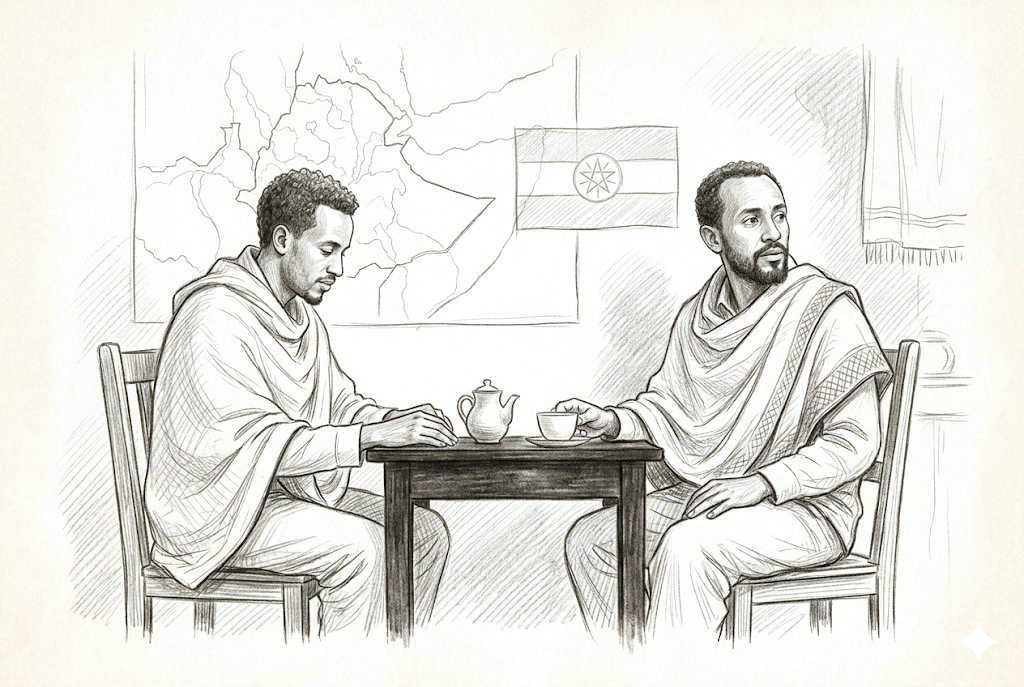
“The country!” I said, half-joking. “Is the country bigger than him?” And I let it go. But I have to ask: is country really bigger than friend?
This thing we call country is sometimes astonishing. It can poison even friendships, set people against one another by birth and ethnicity, push them into silent grudges, and feel nothing about it. What sort of strange thing is this country?
And to say that because my friend defended or criticized so-and-so, “what comes against the country comes against me” (በአገር የመጣ በኔ የመጣ ነው), what is that supposed to mean? One thing did sting me. I didn’t get the chance to joke back at him, to say: what comes against my friend comes against the country (በጓደኛዬ የመጣ በአገር የመጣ ነው). We parted that way.
You might ask: how did you ever take such a man for a friend in the first place? Please don’t say that to me. Friendship is sometimes a lifelong debt. Whether it grew or diminished, whether it stayed in your life or sat aside like an entrusted treasure, it does not matter. Even if it doesn’t continue, the memory is sweet. Whether they change or do not, whether they live or betray or die, a friend is a friend. Wealth doesn’t change it. Knowledge doesn’t change it. Politics, faith: they don’t add to it, they don’t subtract from it. Even if your friend backed someone or criticized someone, the worst you might hear is, “Oh, he’s in love with this fellow,” or “You’re going to die holding on to this one,” and that’s the end of it. But friendship these days?
These days, the merest brush against country or ethnicity or neighborhood is enough to set people raging. Country and ethnicity now shove themselves between husband and wife. They can drive life partners apart over which village they came from.
For the country’s sake, people sulk at people. They lock themselves in. Cornered, hunched, locked away in their houses, how many sit at home like this? Once upon a time, picking apart the public was one of friendship’s quiet pleasures. But now even a friend gets folded into one side or the other, government or people, and we are made to lower our eyes. Some, like Abraham with his sacrifice, are ready to give up their friends in public for the country’s interest. It is a strange thing to watch.
Anyway: will this age of adding and subtracting finish off our friends? Not being able to say “what comes against our friend comes against the country” (በጓደኛችን የመጣ በአገር የመጣ ነው) is a hard thing. A country that loves no one within her, that loves only herself, ends up angry. And out of all that hatred, with not one person left to love, that there are still people who call themselves “country-lovers” never stops surprising me. My friend, even if you steal, even if you lie, even if you kill, you are still my friend. I may not support you. I may not follow you. But before I say “what is wrong with him,” I will first ask “what has happened to him?” There is no fame for me to gain, no country for me to save, by being the first to hand you over. Over my dead body!
This article was originally published in Ledesta Amharic by the author.
Subscribe to Ledesta
New writing in your inbox. English and Amharic.