And finally, look at this film: it shows us Emperor Haile Selassie I in his final days — under arrest, imprisoned by the Derg. Look at the room he was kept in. Among the five books in that room, three were works by the Honorable Mr. Kebede Mikael.
As the filmmaker enters the room where His Majesty had been, the book the Emperor was reading lies open: Kebede Mikael’s ሥልጣኔ ማለት ምንድነች? — What Is Civilization?
Mr. Kebede was asked about this.
Q: When the Emperor was in such terrible circumstances, out of the thousands of books in his palace he chose your books to take with him, and in his final days he was reading What Is Civilization? Why do you think that was?
Kebede: I cannot say. I do not know. After I wrote The Air of Civilization and What Is Civilization?, His Majesty and I had grown distant.
What caused the distance?
Earlier, when I had given him my book How Japan Became Civilized, he read it repeatedly and then said to me: Why don’t you leave this subject alone? We read what is written, but we do not translate it into action. Since we make no use of it, stop writing such books. So perhaps in his final days he remembered what he had said to me back then. That may have been why.
I found this passage in the film The Life Story of Kebede Mikael, made by the writer and poet Engineer Tadele Bitul Kibret.
In that film, made in memory of Kebede Mikael’s enduring presence, the Emperor is seen pacing the room with What Is Civilization? open before him. I saw the writer Kebede’s strength in His Majesty. And I saw the engineer’s devoted work inside the writer Kebede.
Something connected to all this came to mind. The critic and writer Asfaw Damte once told me a similar story.
It was during the Derg years. The Sertoader newspaper was preparing to celebrate its first anniversary. To make the occasion fitting, the writer Birhanu Zerihun and Shimelis Mazengia — head of the Ideology Department — were planning the event. They decided to invite Ethiopia’s greatest literary figure as their guest of honor: Kebede Mikael.
The poem እሮሮ (Erroro) was chosen to be read at the ceremony. Kebede Mikael was to give a speech on literature. Comrade Chairman Mengistu would be seated in solemn attention. With this program in mind, the two of them — Birhanu and Shimelis — went together to Kebede Mikael.
They reached him and said: “We invite you with great humility — you, representing the literary era that came before, to speak as a writer of the former generation…”
Kebede listened carefully and then asked Shimelis: “What exactly do you mean by the former generation of writers?”
“I mean those who came before and after 1966.”
To which Kebede said: “Ah — so you must have been born after 1966?”
And then, immediately:
“A writer is called ‘former’ only if he is dead, or if his pen has dried up. As you can see, I am not dead.”
This manuscript I am reviewing — out of the seventy-one works I have written, only about twenty-one have been published. So you tell me you have chosen Erroro? That is nothing — that is something I wrote when you were a student. It is old. What Ethiopia is asking today is: Does Kebede Mikael still exist, or is he dead? If he is alive, what is he doing?
You ask me to speak about literature — gladly. Art is above all things. But listen, my friend: art has no party. Art rises about human life, about love, about treachery, about the fundamental things. But now — who, on my life, is there such a thing as capitalist love and communist love? Is love love?
At this, they said: “Oh — it might be better if this man stays away.” And they let him be.
In Engineer Tadele Bitul’s film, it is noted that Kebede Mikael’s great work spans the years from 1930 to the 1960s (Ethiopian Calendar). After the 1960s, however, the great literary figure lived in difficulty and want — narrated with deep regret. As the engineer put it: this man who shaped the minds of Ethiopia’s intellectuals, who built them in ethics and in love of country, was forgotten — like so many of our great artists.
The Honorable Mr. Kebede Mikael
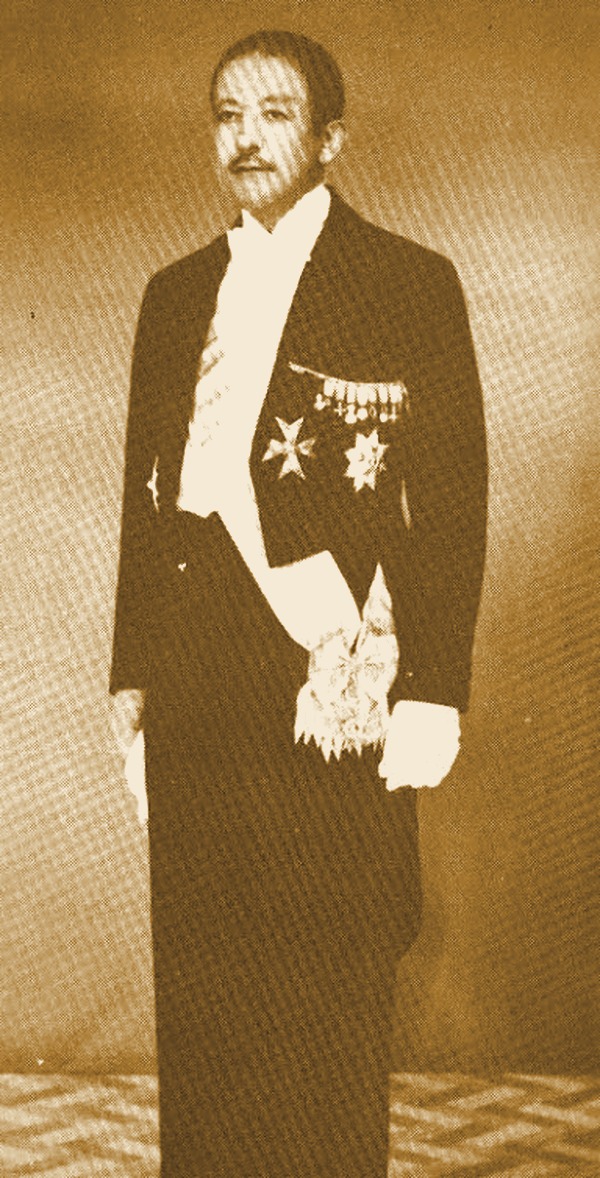
The child Kebede Mikael was born near Debre Birhan, at a place called Germo Gabriel, to his mother Mrs. Atsede Mikael. When he entered the local church school, he was registered as Kebede Mikael — taking his grandfather’s name. Mrs. Atsede had given birth to Kebede when she was very young, so Kebede did not call her “mother.” He called her Etemé — a softer, almost sister-like name. His entry into modern schooling came through the counsel and support of his uncle Mr. Seife Mikael and his mother. He first attended Alliance, then the Lazarist school. His ability and learning earned him such a reputation that he was even considered as a tutor to Emperor Haile Selassie I’s son, Prince Mekonnen. In 1929 EC he married Mrs. Yeshi.
Kebede served in many government offices — from secretary to special official to minister. Representing the Ethiopian government, he met with the Vatican and with leaders of other countries; this is shown in the film. He represented Ethiopia in negotiations and in the signing of treaties.
In matters of education, he was instrumental in establishing a new School of Crafts and Technical College, as well as the Addis Ababa School of Fine Arts — the only one of its kind in Ethiopia. As he traveled abroad, he read whatever books he encountered, working to bring developments and technical improvements to his own country.
For this purpose he wrote What Is Civilization? and How Japan Became Civilized. He urged the government to take what was useful from these books and put it into practice. He founded the Tendaho farms. He worked at great effort to establish industries — all of this is shown in the film. For these labors, Mr. Kebede Mikael received many medals and honors from Ethiopia and from foreign governments. Some of these survived; the rest were destroyed along with much else of his property. The survivors are displayed in the film.
Kebede Mikael the Poet
Solomon said there is a time for everything
I would have asked him, had we met,
When will the time for death to die be?
— Kebede Mikael
Here I see philosophy. With these unassuming words — words that do not strain — Kebede has raised an enormous philosophical question. He has put Solomon’s old saying about time to the test. He has asked: when will death itself die?
Kebede and Mengistu Lemma are alike in this, to my mind. Both their poems use plain words to set great ideas turning in the reader. Their words do not pile up. Their meanings do not hide beneath the surface. They seem to me clear writers of literature. And so Kebede is.
Why, then, do our teachers of literature not raise up the name of Kebede Mikael more?
I once asked Asfaw Damte.
Those who came later, who went through the schools, are simply not familiar with Kebede Mikael’s work. And besides, we have no habit of going back and examining. When the teacher himself is like this, where will the student get it from?
Where would you place Kebede Mikael? I had asked Asfaw.
Kebede Mikael is a man of literature. He writes in verse and in prose. But it is in verse that he most excels. He is like a master poet — a bale-qene — and he saw himself as one. The rest of his books were, for him, almost incidental. In Amharic common verse he is a master. He expresses the most subtle ideas with the simplest delivery. Beyond that — looking at his total contribution — his nonfiction on civilization should not be dismissed. Tales and Parables, Great Men, Sparks of Knowledge — these qualify him as an educator.
This great literary figure was the first recipient of the Emperor Haile Selassie Prize for Literature in Ethiopian literary history. As Asfaw Damte — a member of the prize committee — told me, the contenders at the time were many. Among them were Blatten Geta Mahteme Selassie, Mengistu Lemma, and Tsegaye Gebremedhin.
Kebede Mikael the Writer
In Engineer Tadele’s account, Kebede Mikael wrote 91 books. Most of these are the distilled essence of his thought. He wrote 50 plays — in verse and in prose. Beyond that, he wrote 9 books offering perspectives on economic development in countries that had fallen behind, particularly Ethiopia. He has 7 books of religious inquiry, written from his research into the scriptures. He produced 15 books ranging from folklore to history. He wrote 4 books on civilization. In addition to these, more than 160 manuscripts are said to have been lost for various reasons. According to Engineer Tadele in the film, Kebede Mikael authored more than 250 works in all.
Originally published in The Reporter.
Subscribe to Ledesta
New writing in your inbox. English and Amharic.