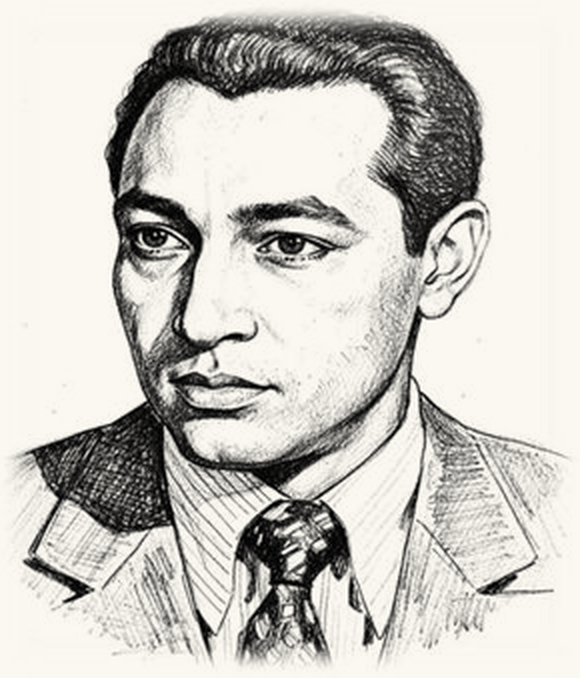
“…a hundred donkeys braying in unison could never sound sweeter than a single masinqo.”
I read Keadmas Bashager, Yehlina Dewel, Hadis, Yeqey Kokeb Tiri, Derasiw, and Oromay — and then I told him I’d like to interview him. He said “All right” at once. What kind of man was he, after all! I can’t say I understood everything Baalu told me, rightly or wrongly, but I came away with a great deal. Here is how he answered the questions I put to him.
Q. What does it take to become a writer?
They say it takes blood and sweat to become a writer. Every person has a book inside his heart. But most of us never write it. We die carrying it.
Oromay, p. 249
Q. And you — did you write and die, or write and live?
I couldn’t write. Isn’t that the truth of it? So why hide it from myself? I couldn’t write. The fact is, I have nothing new to say. Everything worth saying has already been said by writers better than I am. So I’m only wasting my time. I have nothing to say. And if I did, I wouldn’t know what it was. And even if I knew, I couldn’t put it into words. Words… words don’t express what they’re meant to express. They mock.
Derasiw, p. 89
Q. But what I’m asking is whether you wrote and died, or wrote and lived. I’m watching you write, and you tell me you couldn’t write? Tell me instead — or do you mean to hide from me whether you’ve lived or died? Should I say you don’t trust me?
I don’t trust Ethiopians. Beginning with myself, we are a people who live behind masks. The face we show others and our true nature are two different things. Like our folktales, our literature, and our speech, our character too is wax and gold.
Yeqey Kokeb Tiri, p. 221
Q. How can you say that? All your sacrifice — was it for a people you don’t even trust? Or is it like the saying, “Love a man, but don’t trust him” — that you love them even without trusting them? I don’t understand at all. Couldn’t you be plain with me?
Being plain is not our national temperament. By our custom, plainness is a trait tied to baseness and to madness.
Yeqey Kokeb Tiri, p. 92
Q. Come now! I don’t think we need quite such a thrashing. If you’re grieved with us, tell us your sorrow and let us understand you.
Each of us carries his sorrow in his own arms — joy we share together. What good does it do to add sorrow to this miserable world? Since everyone already carries grief enough in his heart, what one wants from another is only joy. And so it should be.
Yeqey Kokeb Tiri, p. 14
Q. I wanted a short answer. Are you grieved, or aren’t you?
A writer feels no sorrow of his own — he grieves for mankind. But he has no grief of his own. God, they say, made man in his own image. Yet he grieves for mankind. And it isn’t strange. The writer is just the same.
Oromay, p. 361
Q. You’re never at a loss for an answer. Be that as it may, this golden society doesn’t seem to have pleased you. Should I say some writers find the whole society not to their taste?
And society finds our work not to its taste either. We artists call ourselves pearls — no one looks at us. We call ourselves honey — no one tastes us. They won’t nurse the children we’ve borne. In fact, they torment us with them.
Yeqey Kokeb Tiri, p. 82
Q. Why do you think they torment you? As they say, “When your father’s house is looted, loot along with them” — some strangle the truth to steal a name and money for themselves. And truth is everyone’s throat. One swallows on its behalf; another is choked by it. Be that as it may — in a society where half are scrambling to throttle themselves and half to throttle others, what do you say the purpose of artists should be?
The purpose and goal of artists is truth. But how many artists are ready to stand for truth and die, to go hungry, ragged, and thirsty for it? It wouldn’t surprise me if society looked on us with contempt and gave us no value. Art that hasn’t grasped truth has neither worth nor permanence. It remains the dregs and sediment of history.
Yeqey Kokeb Tiri, p. 82
Q. First you said “they torment us”; now you say “it wouldn’t surprise me if they gave us no value.” You write that way often. You’re right, of course — tossing opposing ideas back and forth and tangling them together does seem to be human nature. You could even call it a duty. I don’t mind. But sometimes you seem to be making fun of your own ideas. Am I wrong?
Being able to laugh at oneself is a grace. It’s good health, too. By ill luck, most of us were never blessed with that kind of grace.
Oromay, p. 48
Q. But why do you make yourself such a man apart? Doesn’t one man setting himself apart from this society seem like a mistake to you?
A thousand men can be wrong, and one alone can be right. Yes — a hundred donkeys braying in unison could never sound sweeter than a single masinqo.
Yehlina Dewel, p. 178
Q. Even so, even so… look, if you don’t fall in with society, it either crushes you or uses you. Here you are, for instance — a writer. And a far bolder writer than most. As the saying goes, “the true artist breathes the air of the age he lives in” — you’re a true writer who breathes the air around you. But that’s dangerous. As my countrymen say, “there’s no field left for me to live in, no hole left to crawl into” — and breathing freely as you find it may bring you trouble down the road. But for whose sake? Besides, to my mind the true writer and the poor man seem to be one and the same. No one asks, “Never mind what you do — what do you eat? Where do you live?” of the poor man. So, my dear sir, don’t trouble yourself. No one comes to your aid in your hour of need. And if they do, it’s only on a day that suits them. Just like Tewodros. When Tewodros stood on the heights of Meqdela and cried out — calling, “Is there anyone for the country?” — who came to him? They came against him, not for him. Yet today, when history stirs us, here we are, come to his aid. Aren’t we the swift rescuers!! Even so, it does Tewodros no good at all. And that’s exactly why I ask you: did you write and die, or write and live? Either way — dead or alive — you gain nothing. As I told you, tomorrow, on a day that suits them, you’ll watch them all come scrambling to hang their names on yours and dangle from it. Am I not right?
In this world, one man is another’s ladder… those like me… like you, who deceive themselves morning and night crying Conscience! Conscience! — they end up as the stirrup. It was so in the old days, and even now nature hasn’t broken her law.
Keadmas Bashager, p. 36
Q. So you’ve just been prattling at me all along! Ha! Who can manage you, my boy! How fortunate is the man who knows everything, and then does what he knows all over again. Could you be like that too? Everything you do amazes me. They push you here, you come out there. Sometimes, for instance, you look as if you’d lost your bearings standing guard for this revolution — and other times…?
Living a revolutionary life by revolutionary thinking is extremely hard. Many rush greedily to the trial; few are found to have passed through it. The deacons’ clamor doesn’t make the Mass beautiful.
Yeqey Kokeb Tiri, p. ……
Q. There, didn’t I tell you? You’re an astonishing man. But when will I ever let you go — and I’ve only just found you, mind you. So, going by what you’ve said: even though you say it’s hard to come through the trial, you do support the change. If that’s so, why do you mock some of the reform movements?
But don’t imagine that growth must follow just because change has come. The trouble with growth isn’t production. The trouble is the people’s capacity to produce. Do you understand what backwardness really means? Backwardness, at its root, means backwardness of the mind. And when you bring socialism to such a people, what do you think they’ll share? Sheer poverty. What else could they share? Wouldn’t it be better if you simply stopped shouting in the wilderness? Go look for your empty dreams and your fool’s paradise up in the empty air of that university, if you must. But leave the people alone.
Hadis, p. 107
Q. Aha! So you mean there’s no need for any such thing as change at all?
A cow that gives three liters of milk a day can’t be milked for twenty-five just because change has come. What Ethiopia lacks is a hand that works and shows for it.
Yehlina Dewel, p. 178
“For the old generation to be the stub and the new to be the firstborn — for one to be the end and the other the beginning — is madness; it wears you down.”
Last week you read what Baalu Girma and I talked about. Today the final part continues. As you saw, I questioned him as I pleased, and he answered as he pleased. If you asked him the same way, he’d answer you too… So! Let me take my leave of you now and go talk with him.
Q. All right, Gash Baalu, finish the conversation you started with me last week! Last time, when I asked you to stay a little, settle down, and talk with me, you refused and rushed off. You’re always in a hurry. You run as though you couldn’t get through a day without doing something. Tell me, on my life — what’s set you running now?
It’s a country on the run. For better or worse — action. The new generation is a generation of action. Time runs short for us. We have no time, we’re a generation in a hurry. A maddened generation. We’re mad, truly. For the old generation to be the stub and the new to be the firstborn — for one to be the end and the other the beginning — is madness; it wears you down.
Oromay, p. 8
Q. Come, let’s talk gently for a while, the way we would with Ababa Sebhat. Tell me about love? Surely love has burned through your heart. You have love of country; you have love of people; you have love of art. In short, I don’t think there’s anywhere love lives that you’re not also found.
Love is the source of life, the spice of life. For a human being, love is as necessary as bread, as water, as air. How many millions of people stumble through the dark each night in search of love… how many, finding none, lie awake in the dry night, gasping and groaning — everyone thinks about love, acts on it. Yet no one wants to speak or write about it. That isn’t a healthy attitude. Love is life. It is the source of life. As for me — I sing of love, I chant it, I write it.
Derasiw, p. 75
Q. You’re right. No one wants to. But you — you’ve sung it, chanted it, written it beautifully. Lulit and Abera; Hirut and Derbé; Hadis and Aynalem; Sirak and Marta; Sirak and Tsigé; Sirak and Seble; and Tsegish and Roman — and above all, Tsegish and Fiammetta Gilai — you dropped them all into love’s pool and set them splashing. Still — I once heard that when Samuel Beckett spoke of the writer James Joyce, he said, “His writing is not about something; it is that something itself.” And you seem to me just like that. For instance, you’d vex us, insisting you’d die unless you showed love whole, baggage and all. Not about love, but love itself — that’s what you had to write. Like Ababa Sebhat, you strained to drag eros into the open, to spoon desire into our mouths. But our throats, strangled by censorship, couldn’t swallow your offering. So tell me — what is your view of desire? What is it that makes you cry desire, desire?
Nature begins to burst into bloom when the flowers burst open. The flower is eros. It is beauty. When a man and a woman come of age, when desire grows lovely in them, when their bodies begin to ache with longing — that is when they add beauty, when they sing the song of joy. When a man’s muscle swells, when a woman fills out — oh, how lovely they are! Their scent calls from afar. Their breath, like a tongue of fire, scorches from a distance. Desire makes them burst into bloom. It makes them frolic. It makes them tremble. When a person aches with desire — oh, the loveliness — that is when life turns sweet. Oh, the sweetness of life in our youth. Even an old man glows when love takes him. Desire is the source of life, of joy, of beauty.
Yeqey Kokeb Tiri, p. 146
Q. And what do you think society makes of all this?
Society performs the act of the flesh — but it doesn’t want to read or hear about the flesh.
Yeqey Kokeb Tiri, p. 105
Q. Well, if society doesn’t want it, what’s it to you? Why not write instead about what society permits itself to hear — about hardship, about loneliness… why don’t you?
I have no desire to sing of hardship and loneliness. What I want to write about is the beauty of the world and the basic goodness of human nature — and the conditions and surroundings that keep a person from finding his own well-being. Within that, hardship and loneliness hold only the smallest place.
Keadmas Bashager, p. 49
Q. So you mean you simply want to write about beauty alone. And beauty, in turn, gives rise to love. But do you think everyone has room for love?
There’s no heart without room for love. Could it be it hasn’t found the right key to open it?…
Derasiw, p. 62
Q. Then how can a person know whether his heart has room for love? Ah, here I go — sometimes I’m tempted to make a soothsayer of you. I’ll ask you the unaskable question. What I mean is this: when love takes hold, how does it behave?
Isn’t it said that love, blind itself, makes others blind? It shows everything as lovely, beautiful. In love’s eye, the world becomes a bouquet of roses. Every sound turns to sweet music — slow, sorrowful music. In the midst of grief, happiness comes. And in love’s eye, what can’t be trusted breeds doubt; it grates, it enrages. Love turns you back into a child. Beautiful childhood — or beautiful foolishness?
Oromay, p. 207
Q. What do I know — you answer it yourself!?
When a man begins to think ceaselessly about a woman, you might say love has taken him, or that he’s turned fool.
Oromay, p. 283
Q. Apart from foolishness, don’t we have other animal feelings inside us?
The human race is foolish. It’s a fool. For the short, foolish life it lives, it presumes — just because it has the power to think — to give its animal nature some subtle, exalted meaning. That is the very source of its suffering.
Yeqey Kokeb Tiri, p. 228
Q. So, by your own account, a human being shouldn’t fret or think too much about the trait that marks his animal nature. Since life is short, he should just live on, playing the fool. To me, though, life seems more than that. “Fortune,” especially, holds a great place in life. The kind of lot may differ, but no one lives without fortune. And not every fortune favors. Leaving aside the unlucky — even if we speak only of the lucky — the lucky don’t seem to have earned it knowingly. So what do you say about all this?
The ones who manage to live lucky in this world are the strong, who seize the fortune that meets them without any hesitation or wavering. The rest of us are life’s hangers-on.
Hadis, p. 207
Q. All right, let the hanging-on be — we’ll hang on. But what I didn’t grasp: when you say “the strong,” what do you mean? How is strength shown? By cleverness? By toughness? Or by wealth? Even these words aren’t clear to me. Tell me — what’s your view of the clever, the strong, the wealthy, the wise?
A certain sage… when they asked him “Who is clever?” he answered, “He who can learn from every person; who is strong? he who can master his own feelings; who is wealthy? he who knows ‘enough’; who is honored? he who honors others.” So they say.
Hadis, p. 22
Q. Let the rest be — but when you tell me the man who knows “enough” is wealthy, I don’t follow. For instance, I have nothing right now. And I think the next man would say the same. All of us wait on “tomorrow” to come bringing what we lack or what we’ve gone without — money, especially. And money is counted. And number has no end. Even if it had an end, well and good — a man might say “enough.” So how does this work? Or do you mean there’s no need for any such thing as money at all?
Without money, I’ve seen that a man is no man at all… What is life worth without money? You see, the world spends the day dancing all its lovely, alluring, beautiful things before your face. And without money, they’re not to be had. Without money, the beautiful things of life are not to be had. It’s as they say — he who has fine tea drinks it; he who hasn’t only stares.
Hadis, p. 95
Q. Yes, what can you do but mock us! “Without money, I’ve seen that a man is no man at all” — you tell us that?! And yet you yourself proved, by your own life, that a man is a man without money. Or aren’t you a man? Why didn’t you write — and live — for money, the way some do? Because you decided “what’s the use of loving everything”?
You love everything, and in the end you lose everything too. C’est la vie. Oromay!
Oromay, p. 370 — the final sentence
Thank you so much. Oromay!
Originally published in the newspaper Yezarèyitu Ethiopia, Meskerem 17 and 24, 1984 (Ethiopian calendar). Written by Dereje Desta.
Subscribe to Ledesta
New writing in your inbox. English and Amharic.